INSIGHTS
Xenia Debuts Composites Built for EV Tooling
Xenia's pellet-based thermoplastic composites target large-scale 3D printing for automotive EV tooling.
6 Jul 2026
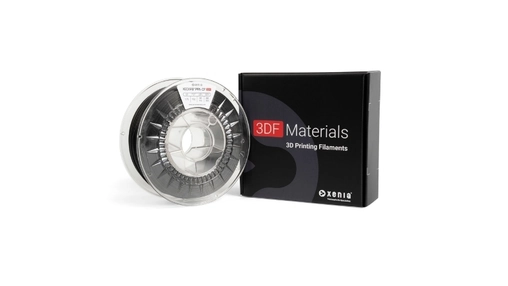
Italian manufacturer Xenia has introduced a line of reinforced, pellet-based thermoplastic composites built for large-scale additive manufacturing. Company officials described the launch, unveiled June 30, as a response to growing demand from automotive manufacturers for tooling used in electric vehicle production. The materials target jigs, lamination masters, thermoforming molds and master models, with lightweight durability as a central design goal.
Electric vehicle production has pushed manufacturers to reconsider the materials used in production fixtures, according to industry analysts, who point to rising demand for composites that hold up under repeated manufacturing cycles without adding excess weight. Built around pellet-based extrusion, Xenia's new range suits the large build volumes required in industrial 3-D printing. Tooling produced this way, the company said, can shorten lead times compared with conventionally machined parts, which often require weeks of setup and finishing.
Fiber reinforcement in the new materials also gives manufacturers tighter dimensional control across complex shapes, a quality that matters for producing lamination masters and thermoforming molds at scale. Precision, in this context, is not incidental; it determines whether a mold can be reused across a production run without drifting out of tolerance.
Analysts note that the broader automotive composites market is expanding quickly, with projections putting it at $71.21 billion by 2034, growing at an annual rate of 10.4 percent. Electrification programs and tightening lightweighting requirements are driving much of that growth, particularly across Europe, where electric vehicle rollouts continue to expand. Xenia's launch arrives squarely within that window.
For automotive suppliers, the new materials point toward a possible consolidation of tooling production within additive manufacturing workflows, easing dependence on subcontracted machining. Development timelines that traditionally stretched over weeks could compress as a result. Yet how widely such materials get adopted may depend on cost comparisons that have not yet been tested at scale. The results could shape how manufacturers build tooling in the years ahead.
Related News


topics on the agenda
ADVANCES IN DISSIMILAR MATERIAL JOINING
Day 1: Wednesday, September 23, 2026
09:30 - 09:55
A HISTORY OF ALUMINUM INNOVATIONS TO ADDRESS AUTOMOTIVE CHALLENGES
Day 1: Wednesday, September 23, 2026
11:30 - 11:55
LIGHTWEIGHTING THROUGH REPLACEMENT OF SMC BY THERMOPLASTICS
Day 1: Wednesday, September 23, 2026
12:00 - 12:25
SUBSCRIBE FOR UPDATES
By submitting, you agree to receive email communications from the event organizers, including upcoming promotions and discounted tickets, news, and access to related events.