MARKET TRENDS
The 1,205-Kilometer Leap Into the Future of EVs
Mercedes-Benz tests a Factorial solid-state battery on public roads, hitting 1,205 km on a single charge and eyeing 2030 production
25 Jun 2026
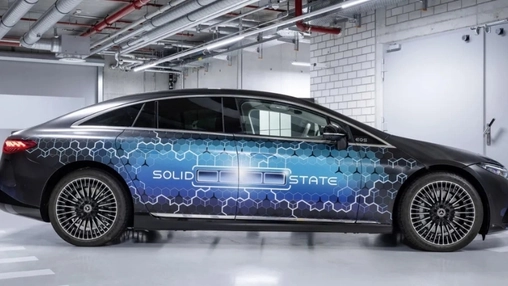
The laboratory promise of next-generation electric vehicles just hit the open road, covering three countries without a single charging stop. A lightly modified Mercedes-Benz EQS test vehicle rolled out of Stuttgart, Germany, navigated the highways of Denmark, and parked in Malmö, Sweden. By the time the wheels stopped turning, the sedan had clocked 1,205 kilometers on public asphalt. Even more stunning was the digital dashboard readout, which showed another 137 kilometers of reserve range left in the bank.
At the core of this marathon run is a lithium-metal solid-state cell developed by US-based Factorial Energy. Engineering a battery to survive a temperature-controlled bench test is one thing, but real-world driving introduces variables like unpredictable traffic, changing topography, and fluctuating climate zones. To handle the physical stress, the powertrain engineers at Mercedes-AMG's Formula 1 unit outfitted the pack with specialized pneumatic actuators. These compact devices adjust to cell volume changes during charging cycles, maintaining the precise pressure required to keep the chemistry stable.
Delivering a massive leap in energy density, the resulting collaboration proves the real-world viability of the technology. The new pack holds roughly 25% more usable energy than conventional EV batteries, yet it mimics the exact dimensions and weight of the standard EQS setup.
For commercial fleet operators, this shift transforms logistical math entirely, eliminating the heavy infrastructure downtime that has historically stalled corporate electrification.
With the pressure now squarely on the rest of the automotive industry, rivals face a compressed development timeline. Volkswagen and other global rivals are pouring billions into their own proprietary solid-state platforms, turning battery chemistry into a competitive frontier. By pushing this technology out of the lab and onto actual highways, Mercedes has forced a faster pace. Mass production is targeted for 2030, but the race to redefine long-distance electric travel has already accelerated.
Related News


topics on the agenda
ADVANCES IN DISSIMILAR MATERIAL JOINING
Day 1: Wednesday, September 23, 2026
09:30 - 09:55
A HISTORY OF ALUMINUM INNOVATIONS TO ADDRESS AUTOMOTIVE CHALLENGES
Day 1: Wednesday, September 23, 2026
11:30 - 11:55
LIGHTWEIGHTING THROUGH REPLACEMENT OF SMC BY THERMOPLASTICS
Day 1: Wednesday, September 23, 2026
12:00 - 12:25
SUBSCRIBE FOR UPDATES
By submitting, you agree to receive email communications from the event organizers, including upcoming promotions and discounted tickets, news, and access to related events.